

Tsinghua University Study Shows How Policies Slash Ship Pollution Near Hainan
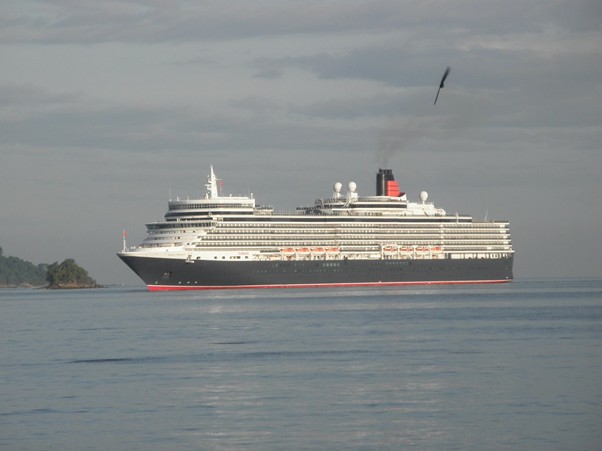
Air pollution from a cargo ship near a coastal port highlights the environmental impact of maritime transport. New research shows that cleaner fuels and coordinated policies can sharply reduce ship emissions in waters around Hainan, China.
New analysis assesses current shipping emissions near China’s Hainan Island and highlights the need to strengthen future emission management policies
CHINA, February 13, 2026 /EINPresswire.com/ -- A new study finds that stricter fuel rules have sharply reduced ship pollution near Hainan Island, China, while international cooperation could further cut emissions. Using high-resolution ship-tracking data, researchers mapped pollution trends from 2019 to 2022 and showed how cleaner fuels and coordinated policies can protect air quality and public health. The findings offer timely guidance for reducing emissions from one of the world’s fastest-growing transport sectors.Global shipping supports modern life by moving food, fuel, and manufactured goods across oceans. Yet this essential industry is also a major source of air pollution and greenhouse gases. Ships release sulfur dioxide, nitrogen oxides, fine particles, and carbon dioxide, which can worsen air quality in coastal communities, harm human health, and contribute to climate change. As maritime trade continues to expand, finding effective ways to control these emissions has become increasingly urgent.
To address this challenge, domestic and international policies have emerged; however, the actual reduction potential of these policies remains unevaluated.
Against this backdrop, a new study made available online on February 12, 2025, in Volume 156 of the Journal of Environmental Sciences examines how ship pollution around China’s southernmost province, Hainan, has changed in recent years and how it could be reduced further through stronger policies and international cooperation. The research was led by Dr. Huan Liu from Tsinghua University, China, together with colleagues. The team focused on waters within 12 nautical miles (Nm) of Hainan’s coastline, where shipping activity is most intense and where pollution has the greatest impact on nearby residents.
In recent years, China has introduced stricter rules to control emissions from ships operating near its shores. One of the most important measures is the Domestic Emission Control Area policy, known as DECA, which requires vessels to use fuel with much lower sulfur content. Sulfur in fuel produces sulfur dioxide and fine particles when burned, both of which are linked to respiratory and heart diseases. To evaluate the impact of these regulations, the researchers developed detailed maps of ship emissions around Hainan from 2019 to 2022. They used data from the Automatic Identification System, which records ships’ positions and movements in real time, and combined it with advanced computer models. This approach allowed them to estimate daily emissions of major pollutants and greenhouse gases at a very high spatial resolution.
The analysis revealed that pollution levels declined sharply after stricter fuel rules were introduced. Between 2019 and 2022, emissions of sulfur dioxide and fine particulate matter dropped by more than 60 percent. In 2022 alone, sulfur dioxide emissions fell by nearly three-quarters compared with the previous year, while PM2.5 decreased by about half. Nitrogen oxide emissions also declined, though more slowly, reflecting the fact that current regulations focus mainly on sulfur control. “These reductions show how quickly air quality can improve when ships switch to cleaner fuels,” Dr. Liu explains. “They demonstrate the strong potential of emission control policies to protect coastal communities.”
However, the study also highlights important limitations. In some ports, access to ultra-low-sulfur fuel remains limited, making it difficult for ships to fully comply with regulations. When cleaner fuel was in short supply, pollution levels rose sharply in the researchers’ models, weakening the overall benefits of the policy.
Beyond domestic regulations, the researchers also explored how international cooperation could further reduce shipping emissions. They examined routes connecting Hainan with other parts of China and with countries in Southeast Asia and Oceania, identifying major sources of pollution and opportunities for joint action. One promising approach is the development of green shipping corridors, which are designated routes where ports and shipping companies work together to support low- or zero-emission vessels and cleaner fuels.
The study found that cooperation along these routes could dramatically increase emission reductions. If Hainan were to become a hub for refueling ships with low-carbon or zero-emission fuels, pollution from vessels passing within 200 Nm of the island could be reduced far more effectively than through local measures alone.
“Green shipping corridors allow countries and ports to share responsibility for emission reduction,” Dr. Liu says. “They create a framework for coordinated action that goes beyond national borders.”
The researchers emphasize that while their findings are based on detailed modeling and real-world shipping data, further studies are needed to assess how these strategies can be implemented safely and effectively at a larger scale. They also note that long-term success will require investment in clean fuel infrastructure, stronger international partnerships, and continued monitoring of ship emissions.
“Our work provides scientific evidence to support smarter and more coordinated policies,” Dr. Liu concludes. “By combining domestic regulation with regional and global cooperation, we can move toward a cleaner and more sustainable future for maritime transport.”
***
Reference
Title of original paper: Ship emissions and reduction potential under domestic policies and international cooperation: A case study in Hainan, China
Journal: Journal of Environmental Sciences
DOI: 10.1016/j.jes.2025.02.006
About Tsinghua University, Beijing, China
Tsinghua University, one of China’s leading comprehensive research universities, is renowned for its excellence in science, engineering, medicine, and interdisciplinary studies. Founded in 1911, the university is consistently ranked among the world’s top institutions. Its faculty includes members of the Chinese Academy of Sciences and Engineering and internationally recognized scholars. With a strong emphasis on innovation, global collaboration, and social responsibility, Tsinghua is committed to advancing cutting-edge research and translating scientific discoveries into real-world solutions that support sustainable development and human well-being.
Website: https://www.tsinghua.edu.cn/en/
About Dr. Huan Liu from Tsinghua University, Beijing, China
Dr. Huan Liu is a professor and doctoral supervisor at the School of Environment, Tsinghua University, Beijing, China. She earned her bachelor’s and Ph.D. degrees in Environmental Engineering from Tsinghua University and completed postdoctoral research at the University of California, Riverside. With over two decades of academic experience, she has published more than 120 scientific studies focusing on the interaction between transportation activities and air pollution, climate change, and emission control strategies. Her work has earned several honors, including the Newton Advanced Fellowship jointly supported by Royal Society of UK and National Natural Science Foundation of China, the Distinguished Young Scientist by National Natural Science Foundation and Young Teachers Award by Fok Ying-Tong Education Foundation.
Funding information
This work was supported by the National Natural Science Foundation of China (No. 42325505), the National Key R&D Pro- gram of China (No. 2022YFC3704200) and the Tsinghua University Initiative Scientific Research Program.
Huan Liu
Tsinghua University
liu_env@tsinghua.edu.cn
Legal Disclaimer:
EIN Presswire provides this news content "as is" without warranty of any kind. We do not accept any responsibility or liability for the accuracy, content, images, videos, licenses, completeness, legality, or reliability of the information contained in this article. If you have any complaints or copyright issues related to this article, kindly contact the author above.
